

How to Cover a Sofa with Throws So They Stay Put
Covering a sofa with throws works in four moves. Measure the sofa, fold each throw to the width of the part you want to cover, tuck the edges into the creases, and anchor the fabric with a grip pad, clip or pillow. Yes, a throw can fully replace a slipcover, and a well-chosen one hides worn upholstery and takes the hit from pets and spills.
The problem is that a loose blanket slides, bunches and ends up on the floor by evening. Most people blame the blanket, but the cause is usually a wrong size, a slick fabric or a missing anchor. Fix those three things and the same throw looks deliberate instead of messy.
This guide walks you through the whole job. You will measure and choose the right throw, pick a layout (back runner, seat cover or full cover), secure it, style it, and protect it from daily wear. The examples use hand-loomed wool throws, the kind we make and sell at KOREDECOR, but every step works with any heavy cotton, linen or wool blanket.
What you need before you drape
You need three things before you start: your sofa measurements, a throw sized to the job, and a fabric with some grip. Spend five minutes on this and the rest goes quickly.
Measure the sofa first
Measure the width of the sofa back, the height from seat to top of the back, and the seat depth. Write the numbers down. A throw that is shorter than your sofa will always look like a mistake.
Here is a worked example for a typical three-seater. It is 84 inches wide, with a back that rises 18 inches above the seat, a seat 22 inches deep and 34 inches of total back height.
- A back runner needs a throw at least 84 inches long, so the ends reach the arms.
- A full cover needs about 78 inches in the short direction (34 down the back, 4 over the top, 18 down the front, 22 across the seat) and at least 84 inches in the long direction.
Measure the sofa before you buy the throw, because size decides whether a blanket looks styled or accidental.
Choose a size and fabric
Pick the size by the job, not by the sofa name. The table uses KOREDECOR's four wool throw sizes against that 84-inch sofa.
| Throw size | What it does on an 84" sofa |
|---|---|
| Small, 42" x 92" | Back runner, arm drape or seat strip |
| Medium, 54" x 102" | Generous back runner or full seat cover |
| Large, 84" x 92" | Full cover with room to tuck |
| Extra Large, 104" x 102" | Full cover for deep, oversized or L-shaped sofas |
For fabric, choose a textured weave in wool, cotton or linen. These grip upholstery. Silky or knit-slick throws slide off leather and microfiber within minutes. Wool also holds a fold well, which helps with the steps below.
Step 1. Pick a layout and fold the throw
Choose one of three layouts based on what you need to hide or protect, then fold the throw to that exact width. Folding first is what separates a tidy drape from a pile.
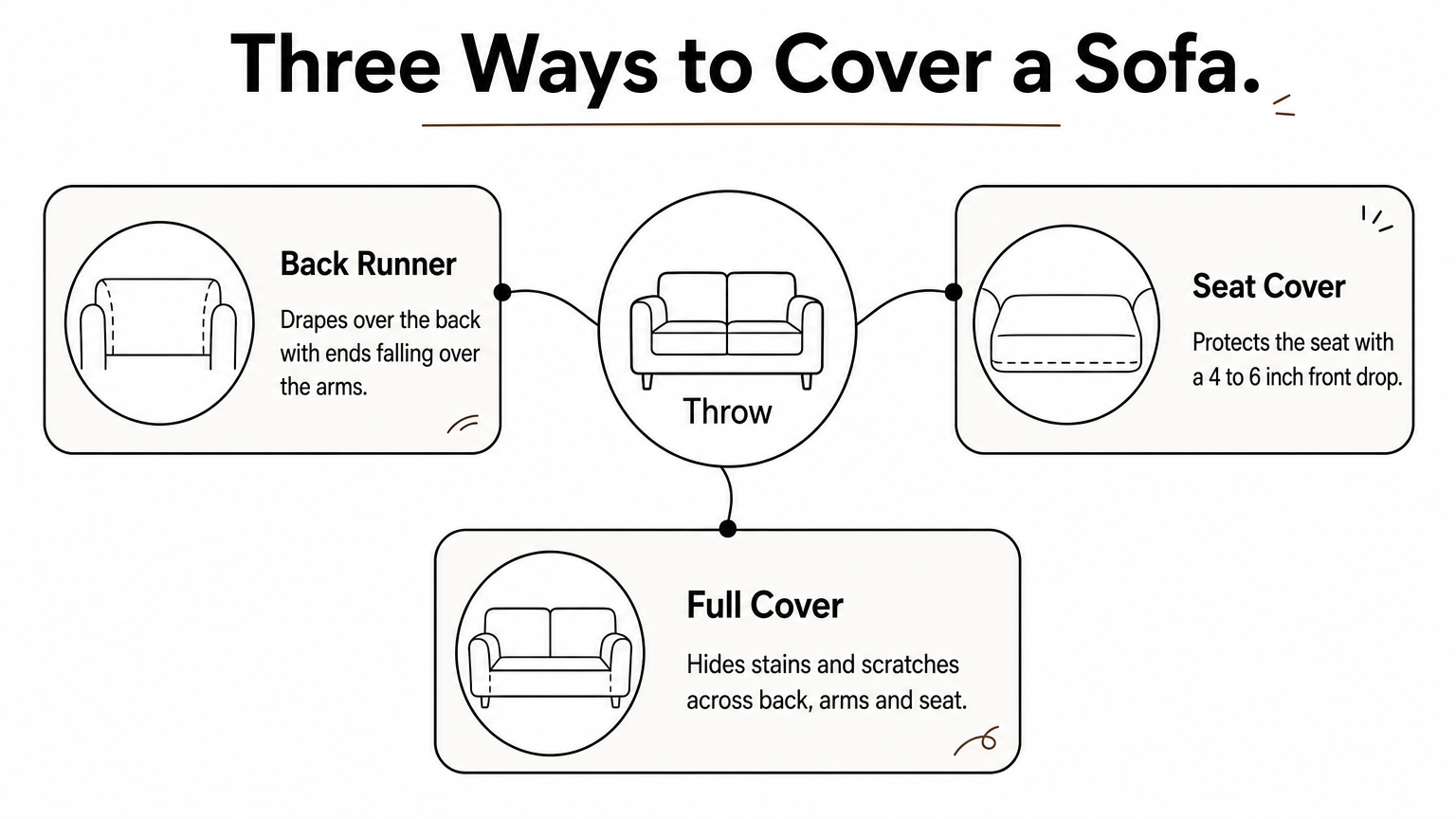
Cover the back with a runner
Use this for a polished look. Lay the throw flat on the floor, then follow these steps.
- Fold it lengthwise into thirds, or in half for a wider look.
- Center it on the top of the back so both ends hang evenly.
- Let the ends fall over the arms, or stop them at the arm edge for a cleaner line.
- Offset the throw by a few inches for a relaxed, styled look.
Cover the seat to take the wear
If the seat is what gets stained or scuffed, fold the throw to the depth of the seat plus a front drop of 4 to 6 inches. Lay it across the seat cushions, press it into the back crease, and let the front edge drape. Children and pets use this part first, so it earns the extra layer. A Medium throw covers a three-seat bench this way.
Make a couch cover out of a blanket
For a full cover, unfold a Large or Extra Large throw completely and shake out the creases. Center it with equal overhang on both arms, then work it down the back and over the seat. Smooth it by hand from the middle outward. This is the closest a couch cover blanket gets to a slipcover, and it hides stains, faded fabric and scratches completely.
Fold the throw to the exact width of the sofa part you are covering, and half the slipping problem disappears.
Step 2. Tuck and anchor so it stays put
Tuck every edge into a crease, then add grip where the fabric still moves. Tucking sets the shape, and anchoring keeps it there.
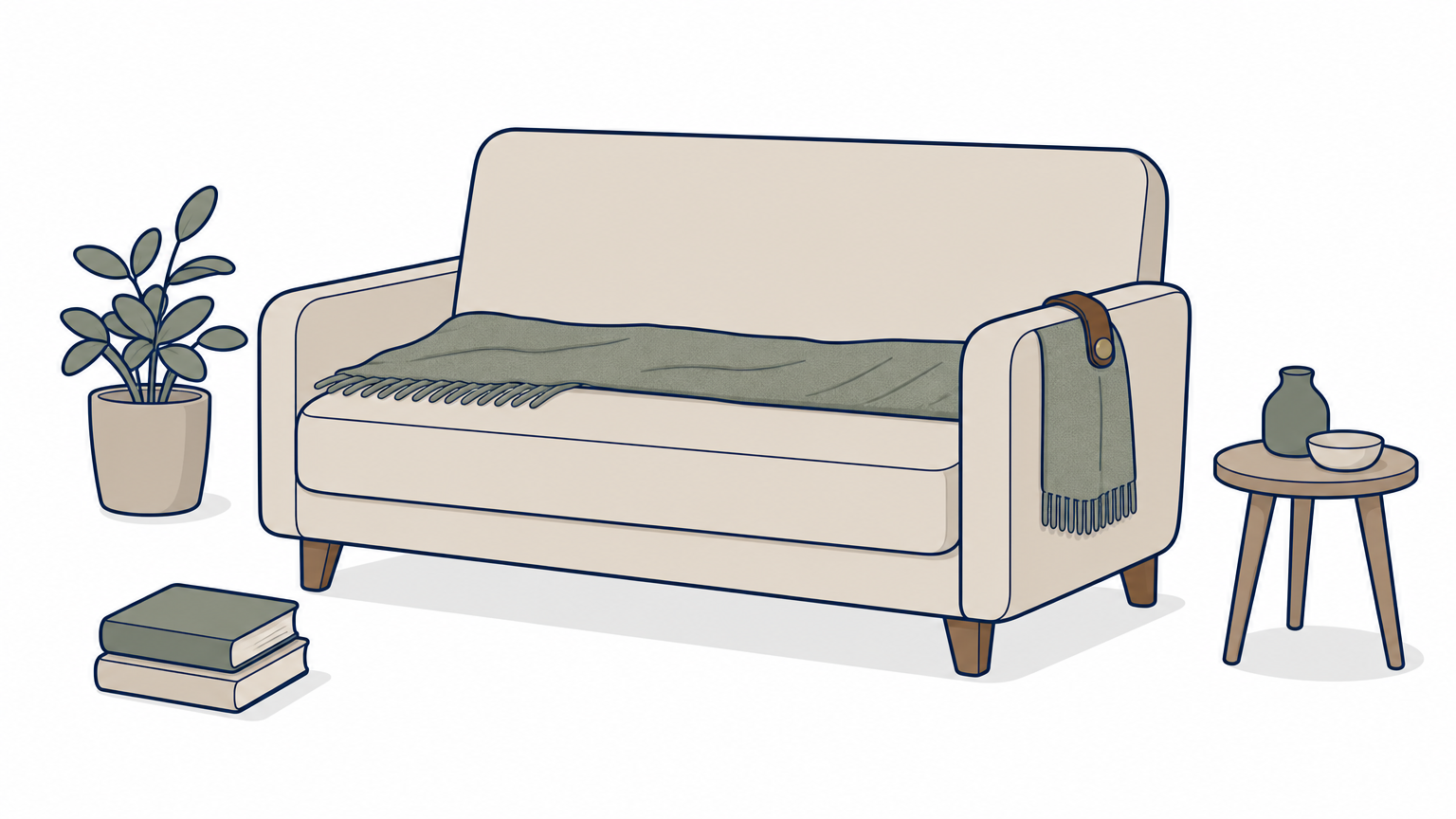
Tuck into the creases
Push the throw firmly into the crease between the seat and the back with your flat hand. Do the same along the arm and under the front edge of each seat cushion. Lift the cushion slightly, slide the hem under, and set it down. The weight of the cushion pins the fabric. Leave the tuck slightly loose, because a stretched-tight throw pulls free the first time someone sits down.
Add grip where it still slides
If an edge still creeps, use one of these fixes.
- Non-slip rug pad cut to size and placed under the throw on the seat.
- Blanket clips or fasteners at the arms to hold the drape.
- Throw pillows set on the corners as weights.
- Folding the throw in half so the doubled fabric is heavier and grips better.
Pick the fix by where the slipping happens. Seat slip needs a pad, and arm slip needs clips or pillows.
Tuck into the creases first, then add one piece of grip, and the throw will survive a full evening of use.
Step 3. Style it so it looks deliberate
A throw looks styled when it has a clear fold, a clear edge and a point of contrast. Messy and relaxed are different looks, and the difference is control.
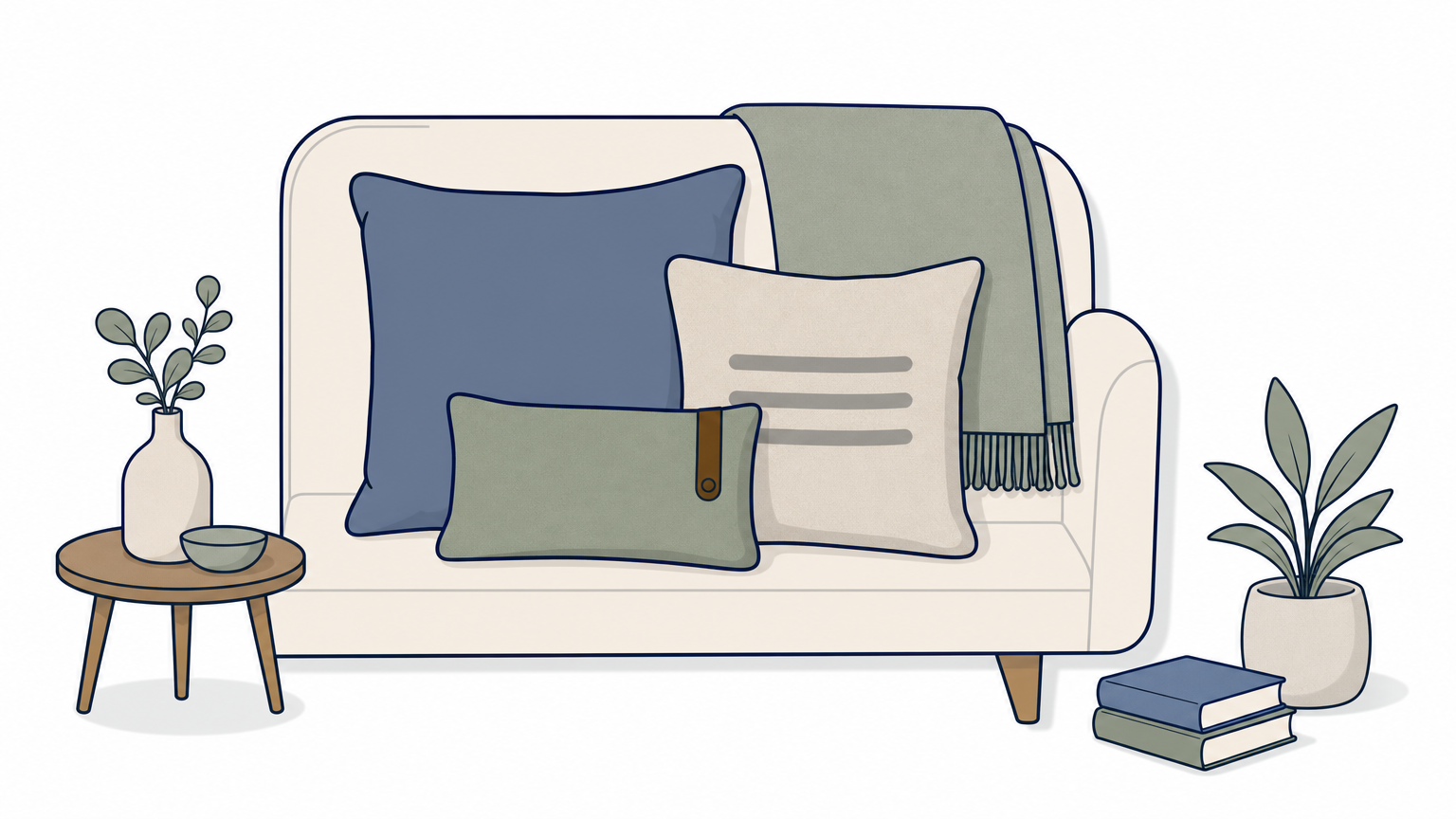
Lay it with intent
Pick one clean fold line and keep it visible. Let a single corner hang over the arm so the sofa looks lived in, not wrapped. Skip the ironing, because soft creases read as natural. A solid throw on a patterned sofa, or a textured neutral on a plain one, looks better than two competing patterns. A tan throw like OPAL or JASPER suits a gray or cream sofa, while a deeper green like OLIVER lifts a neutral one.
Layer with pillows
Put the throw down first, then add pillows on top so they hold it. Use two or three pillows in different sizes, with one lumbar in the middle. Match the colors to the throw and vary the texture. A block-printed linen cover next to a woven wool throw is a simple combination that works. Keep the pillows off the folded edge so the throw stays visible.
One visible fold, one hanging corner and a few layered pillows are enough to make a throw look designed.
Step 4. Protect against pets and spills
A throw protects the sofa only if you can wash it and replace it easily. Treat it as a sacrificial layer and keep the sofa underneath clean.
Use the throw as a barrier
For pets, use the full-cover layout on the seat and tuck it in. Place a rug pad or waterproof liner underneath if accidents are likely, since a plain throw soaks through. Cover the favorite spot rather than the whole sofa. Keep a spare throw nearby, so you can swap the dirty one at once.
Clean it correctly
Blot spills straight away with a clean cloth and never rub. Always check the care label before washing. Wool throws usually need gentle handling, such as spot cleaning, cool water or dry cleaning, and low heat or air drying. Shake the throw outdoors weekly to remove hair and dust. Rotate between two throws so each one rests, and store it folded in a breathable bag.
A throw you can wash and swap easily protects a sofa better than any single expensive cover.
You can start with one throw
Covering a sofa with throws comes down to measuring, folding to fit, tucking into the creases and anchoring what still moves. Choose a back runner, a seat cover or a full cover to match what you need to hide, and replace or wash the layer before it wears out.
If you want a throw that does this job well, KOREDECOR's Indian wool throw blankets are hand-loomed in four sizes, from about $220, with free shipping worldwide. Pick the Large size for a full three-seat cover.


