7 Best Linen Pillow Case Covers in White, Cream and Natural
The best linen pillow case covers are 100% linen, prewashed or stonewashed, sized one to two inches smaller than your insert, and woven heavy enough to hold their shape. For a sofa, a hand block printed cover gives you the most character. For a calm look, choose white, cream or natural linen. For sleeping, buy an envelope-closure linen pillowcase in your bed size. If you want a lower price and fewer wrinkles, a linen-cotton blend does the job.
Most shoppers get stuck because every listing says "pure linen" and the photos look alike. Weight, finish, closure and size decide how a cover looks after ten washes, and prices swing from about $26 for a single pillowcase to over $100 for a premium pair. This article ranks seven types, shows who each one suits, and ends with a short guide to sizing, fiber labels and care.
We design and sell hand block printed linen pillow covers at Koredecor, so we handle this fabric every day. We say plainly where our covers fit and where a plain white or sleeping set is the better call.
Are linen pillow covers worth it?
Yes, linen pillow covers are worth it if you want fabric that lasts and gets softer with every wash, and you are fine with a relaxed, slightly rumpled look. Flax fibers are long and strong, which is why linen has a reputation for durability. Linen pillow case covers cost more than cotton, so the real question is whether the trade-offs fit your home.
What you get for the price
Linen breathes well and dries quickly, so it feels less clammy than most synthetics on a warm night or a sunny sofa. The cloth also has a natural slub texture that makes a plain cover look considered instead of flat. After a few washes the fibers relax, and softness improves with age instead of fading.
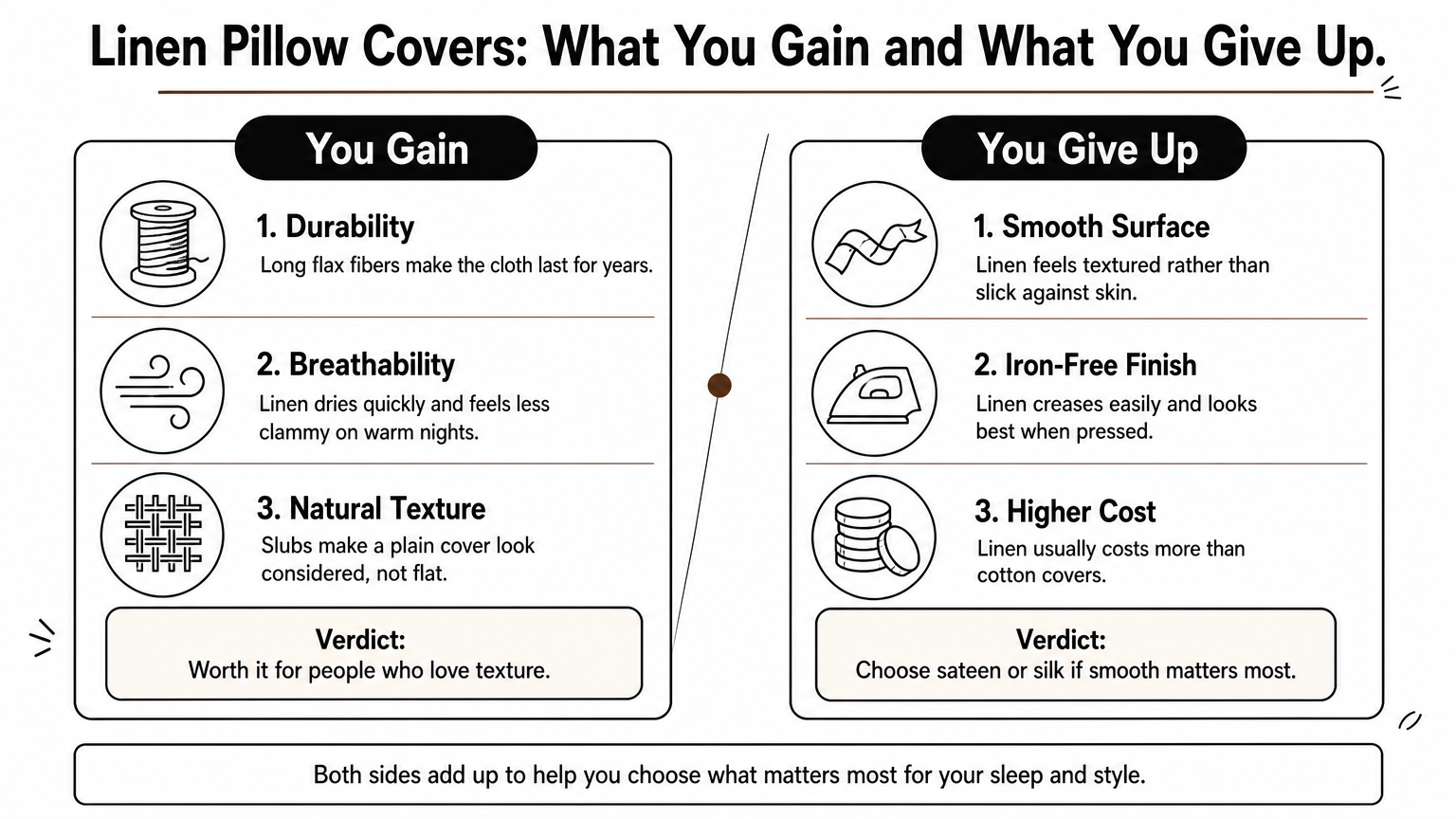
Here is the honest balance sheet:
- You gain: durability, breathability, and a textured look that suits almost any palette.
- You give up: a smooth surface, an iron-free finish, and some budget compared with cotton.
When another fabric makes more sense
Silk and sateen cotton glide against hair and skin better than linen does. Polyester blends stay flat with no ironing at all. If you want a slick, wrinkle-free surface, linen will disappoint you, and you should shop for sateen or silk instead.
Linen rewards people who like texture and punishes people who expect silk.
Is linen the healthiest pillowcase material?
No fabric wins that title outright. Linen is a natural, breathable fiber, which helps with heat and moisture, but how often you wash matters more than the fiber itself. Wash sleeping pillowcases about once a week, and ask your doctor if you have a skin condition or allergy that you suspect a fabric affects.
1. Hand block printed linen pillow covers
For sofas and accent chairs, a hand block printed cover is the strongest of the best linen pillow covers, because the pattern does the styling for you. These are artisan-made linen pillow case covers that keep the natural feel of the fabric and add a design you cannot get from a plain weave.
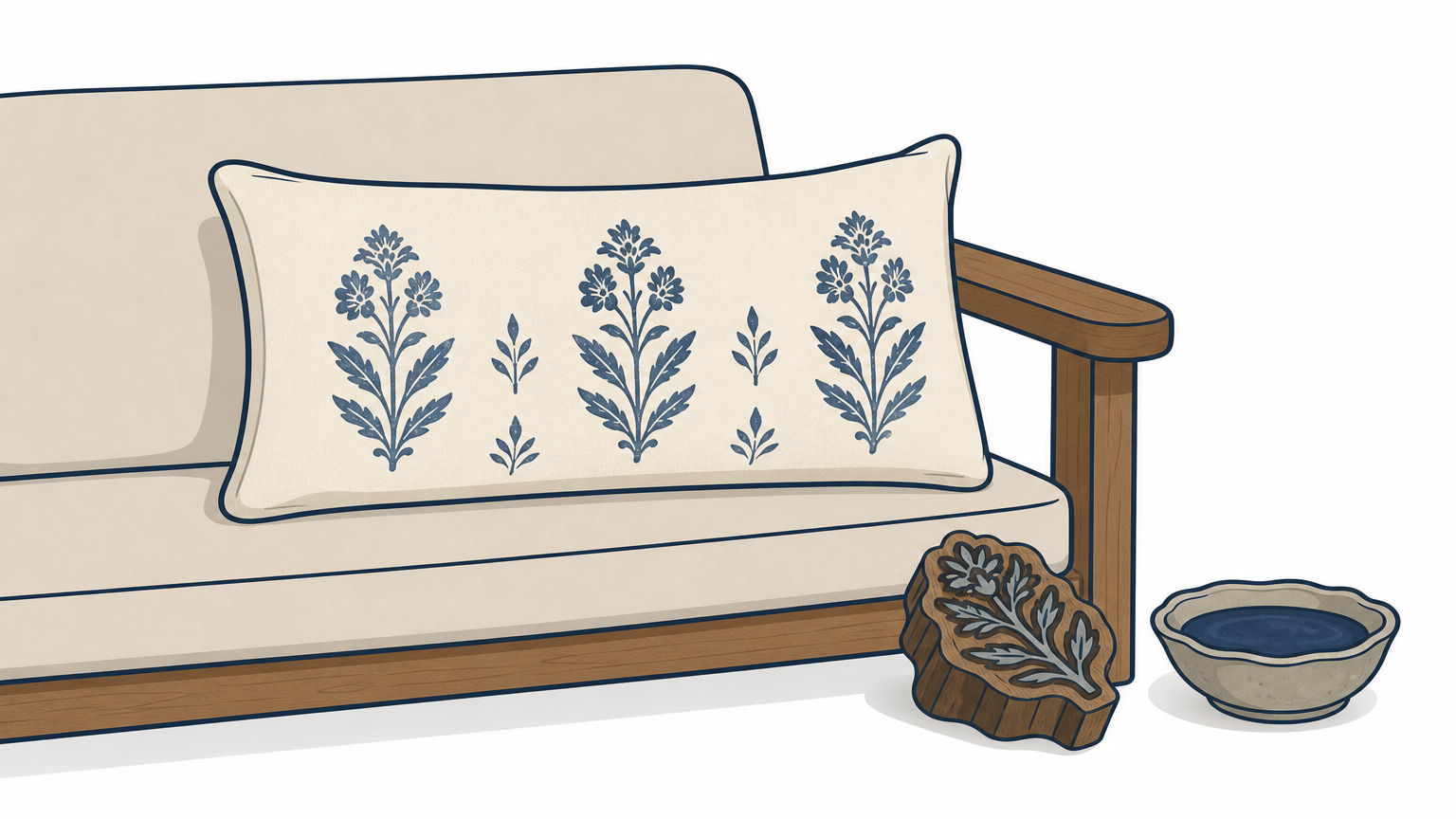
Block printing turns a linen cover from background into the focal point of the sofa.
What it is
Our covers pair a 100% pure linen front with a back of original Kala cotton, and an invisible YKK zipper keeps the edge clean. Artisans in India carve wooden blocks and stamp each design by hand with eco-friendly dyes, so no two covers match perfectly.
Designs run floral and geometric in teal, rosedust, forest green, slate and quieter neutral tones. Many are lumbar shapes, and the prints appear on both sides, so a flipped cover still looks finished.
Who it suits
Choose this style if you want a statement accent instead of a plain shell, or a housewarming gift with a story behind it. Design professionals can also join the Designer Trade Program for 10% off all products and early previews of new collections.
- Good for: boho, farmhouse, heritage and modern neutral rooms.
- Skip it if: you need solid white linen or a sleeping pillowcase.
Price and sizes
Covers run about $50 to $75. Shipping is free in the USA, returns are accepted within 7 days, and the shop holds a 4.94 star average from 86 verified reviews that praise fabric quality and packaging.
- Many covers are lumbar, so check the dimensions on each hand block printed pillow cover listing.
- Buy an insert one to two inches larger than the cover for a full look.
2. White linen pillow covers
White linen pillow covers give you the cleanest, brightest look, and they suit minimalist rooms and pale bedding best. Expect a little more upkeep than darker shades, because a white linen pillow case cover shows every coffee drip and needs regular washing.
Choose white when the room is already calm and you want texture without color.
What it is
Optical white is bleached to a crisp, bright finish. Off white keeps a hint of warmth and looks less stark in daylight, which many people prefer on a sofa.
Lighter weights can look slightly see-through, so a dark or ticking-striped insert may shadow through the cloth. Use a white or ivory insert under white linen and the problem disappears.
Who it suits
White works when your palette is already quiet and you want the fabric itself to carry the interest. It also photographs well, which matters if you stage homes for listings.
- Good for: bedrooms, coastal and Scandinavian rooms, home staging.
- Skip it if: you do not want to wash covers often.
Price and sizes
Plain decorative white covers usually cost about $30 to $60 each, with heavier, prewashed cloth near the top of that range. The most common sizes are 18x18 and 20x20 inches.
- Look for "prewashed" on the listing to limit shrinkage after the first wash.
- Check that the label says 100% linen, not "linen look."
3. Cream linen pillow covers
Cream linen pillow covers are the safest neutral for most homes. They add the warmth that white lacks and hide everyday marks better, so they stay presentable between washes.
Cream is the neutral that works with wood, brass and wool without trying hard.
What it is
Cream sits between white and natural, with a soft ivory or ecru tone. Because the shade is controlled, one cover matches the next more reliably than undyed flax does, which helps when you buy a set.
Cream mixes easily with white bedding, oak and walnut furniture, and brass lamps. A light smudge also shows less than it does on white, so the covers look fresh longer.
Who it suits
Cream suits warm interiors and anyone who finds pure white too cold. Layer a cream cover over a hand-loomed Indian wool throw and the sofa gains depth without clashing.
- Good for: living rooms with wood tones, traditional and farmhouse styles.
- Skip it if: you want the sharp, bright contrast of true white.
Price and sizes
Cream costs about the same as white, roughly $30 to $60 for a plain cover. Use 18x18 or 20x20 on sofas and go up to 22x22 on a bed.
- Order every cover from the same batch or listing if you want exact color matching.
- Plan on a cover one to two inches smaller than the insert.
4. Natural linen pillow covers
Natural linen pillow covers show the fabric as it comes from the flax plant, in tones from pale oatmeal to soft taupe. They suit rustic, farmhouse and boho rooms, and they are the easiest linen to mix with prints.
Natural linen is the quiet partner that lets patterned covers shine.
What it is
Natural means little or no dye, so the color is the flax's own. Expect slubs and small tone shifts along the cloth, which are part of the appeal and not a defect.
Because the color is neutral and slightly earthy, natural linen mixes well with patterned pillows. Put one next to a block printed cover and the print looks richer, not busier.
Who it suits
Pick natural if you like an organic, lived-in feel and do not want the sharpness of white. It also hides light dust and wear well, which helps in family rooms.
- Good for: boho, rustic, Japandi and layered neutral schemes.
- Skip it if: you want a perfectly uniform, bright color.
Price and sizes
Natural covers land in the same band as white and cream, usually $30 to $60 for a plain 18x18 or 20x20. Heavier flax with a tighter weave costs more but keeps its shape better.
- Hold the cover next to your sofa fabric in daylight before you decide.
- Wash once before use if the listing does not say prewashed.
5. Stonewashed linen pillow covers
Stonewashed linen pillow covers are the pick if you dislike the stiff, crisp hand of new linen. The finish makes the cloth soft from the first day, and it is one of the best linen pillow covers for everyday use on beds.
Stonewashing is a finish, not a color, so you can find it in white, cream and natural.
What it is
Stonewashing tumbles the fabric to break in the fibers before it reaches you. The result is a soft hand, relaxed wrinkles and less shrinkage after your first wash at home.
Because it is a finish, you will see it paired with every color. Searching for "stonewashed" or "prewashed" is a quick way to filter out the stiffest, newest-feeling cloth.
Who it suits
Stonewashed covers suit people who want linen's look with a softer touch. They are a good first linen purchase because they feel pleasant straight out of the package.
- Good for: bed pillows, kids' rooms, daily sofa use.
- Skip it if: you like a sharp, tailored, pressed look.
Price and sizes
Plain stonewashed covers commonly sit in the same $30 to $60 band, with the softest, heaviest cloth at the top. Sizes follow the standard run of 18x18, 20x20 and 22x22.
- Check that the zipper or envelope back is also prewashed, so the cover does not pucker.
- Machine wash cool and tumble dry low to keep the soft finish.
6. Linen pillowcases for sleeping
If you want to sleep on linen, buy a linen pillowcase, not a decorative cover. These linen pillowcases come in bed sizes and close with an envelope tuck instead of a zipper, which feels better against your face.
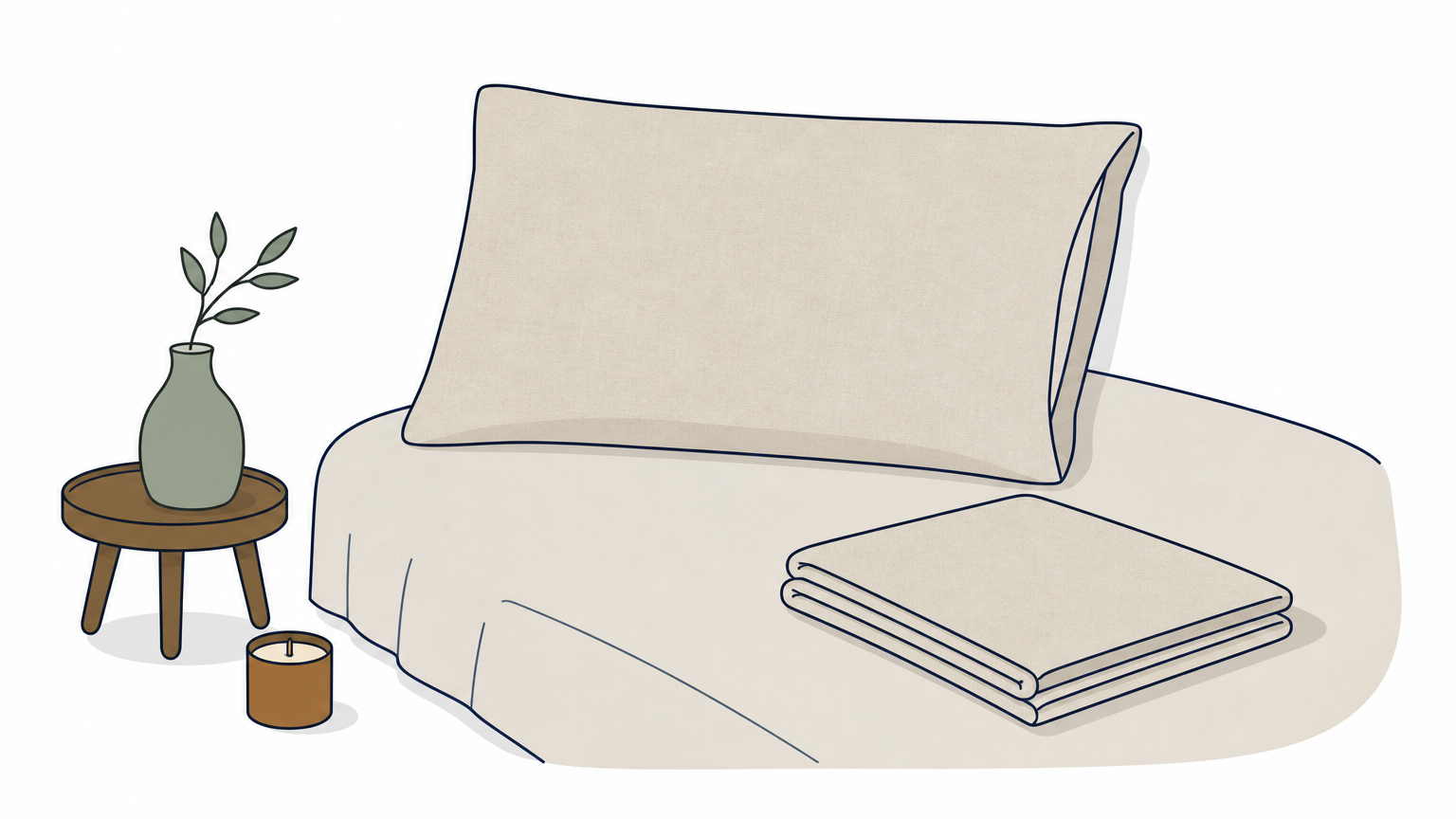
A decorative cover is for looking at, a pillowcase is for lying on, so buy accordingly.
What it is
Sleeping cases use an envelope or "housewife" closure that hides the pillow and leaves no hardware to press into your cheek. Linen's breathability helps hot sleepers, though the cloth feels textured at first.
Look for a medium weight that is neither paper-thin nor stiff. Lighter linen wrinkles more and can feel scratchy, while a mid-weight, prewashed cloth settles into softness within a few washes.
Who it suits
Hot sleepers and people who prefer natural fibers get the most from linen pillowcases. Many buyers pair them with linen sheets, but they also work with cotton bedding.
- Good for: warm bedrooms, natural-fiber bedding, guest rooms.
- Skip it if: you want a silky, smooth feel against your skin.
Price and sizes
Budget single cases start around $26 to $40, while premium pairs run from about $90 to over $100. Pillow sizes are standard 20x26, queen 20x30 and king 20x36 inches.
- Cases are cut about four inches longer than the pillow for the tuck, so read the listed dimensions.
- Buy a pair, because you will rotate them weekly.
7. Linen-cotton blend covers
Linen-cotton blend covers are the value pick. They keep much of linen's look at a lower price and wrinkle less, which makes them a practical entry point if pure linen pillow case covers feel like a stretch.
Read the fiber percentage, because a blend with little linen is mostly cotton.
What it is
A blend mixes linen and cotton fibers in the same cloth. Cotton adds smoothness and softness, and linen adds the texture, so the result feels gentler than pure linen but still looks natural.
Ratios vary a lot, and a blend cannot honestly be sold as 100% linen. Treat the fiber label as the real spec and ignore the marketing copy in the product title.
Who it suits
Blends suit shoppers who want the linen look on a tighter budget, or who dislike ironing. They are also a reasonable choice for rooms where covers get changed often.
- Good for: budget refreshes, rentals, frequent restyling.
- Skip it if: you want maximum breathability and the full linen texture.
Price and sizes
Blends usually cost less than pure linen at the same size. Compare the linen percentage as well as the price, since a cover with 20% linen behaves mostly like cotton.
- Standard 18x18 and 20x20 sizes are the easiest to find.
- Choose at least 50% linen if you want the cloth to read as linen.
How to choose linen pillow covers: size, weight and care
Choose by size first, then fiber content, then weight, and color becomes the easy part. Get those three right and your linen pillow case covers will look good for years. The table and size guide below keep the decision quick.
The seven picks side by side
| Type | Look | Best for | Price tier |
|---|---|---|---|
| 1. Block printed | Patterned, earthy | Sofa accents, gifts | Premium handmade |
| 2. White | Crisp, bright | Minimalist rooms | Mid-range |
| 3. Cream | Warm ivory | Wood-toned rooms | Mid-range |
| 4. Natural | Oatmeal, slubby | Rustic, boho | Mid-range |
| 5. Stonewashed | Soft, relaxed | Beds, daily use | Mid to upper |
| 6. Sleeping cases | Envelope close | Hot sleepers | Budget to premium |
| 7. Blend | Subtle texture | Value shoppers | Budget-friendly |
Sizes that fit common inserts
Buy an insert one to two inches larger than the cover. A 20x20 insert in an 18x18 cover looks full, while a same-size insert looks flat.
| Cover size | Insert size | Typical use |
|---|---|---|
| 16x16 | 18x18 | Small accents, layering |
| 18x18 | 20x20 | Standard sofa pillow |
| 20x20 | 22x22 | Fuller sofa or bed |
| 24x24 | 26x26 | Oversized floor or bed |
| 12x20 | 14x22 | Lumbar for chairs and beds |
Spotting 100% linen and caring for it
Check the fiber label for 100% linen or flax. Terms such as "linen look" or "linen feel" usually mean polyester, and a "linen blend" can contain very little linen, so ask the seller when a listing is vague.
For care, wash cool or warm on a gentle cycle with mild detergent, and tumble dry low or hang dry. Wash a new block printed cover on its own at first, then iron damp for a smooth finish or leave it rumpled on purpose.
Pick the cover that fits how you use it
Linen is worth buying when you value texture, breathability and a fabric that softens with age. Choose white or cream for a calm, plain look, natural for earthy rooms, stonewashed for softness, a pillowcase for sleeping, and a blend for budget. Check the fiber label every time, and size your insert up by an inch or two.
If you want one cover that does more than sit quietly, start with a pattern. Our hand block print linen pillow covers pair pure linen with a Kala cotton back, an invisible zipper and free USA shipping. If a cover is not right, you have 7 days to return it.


