
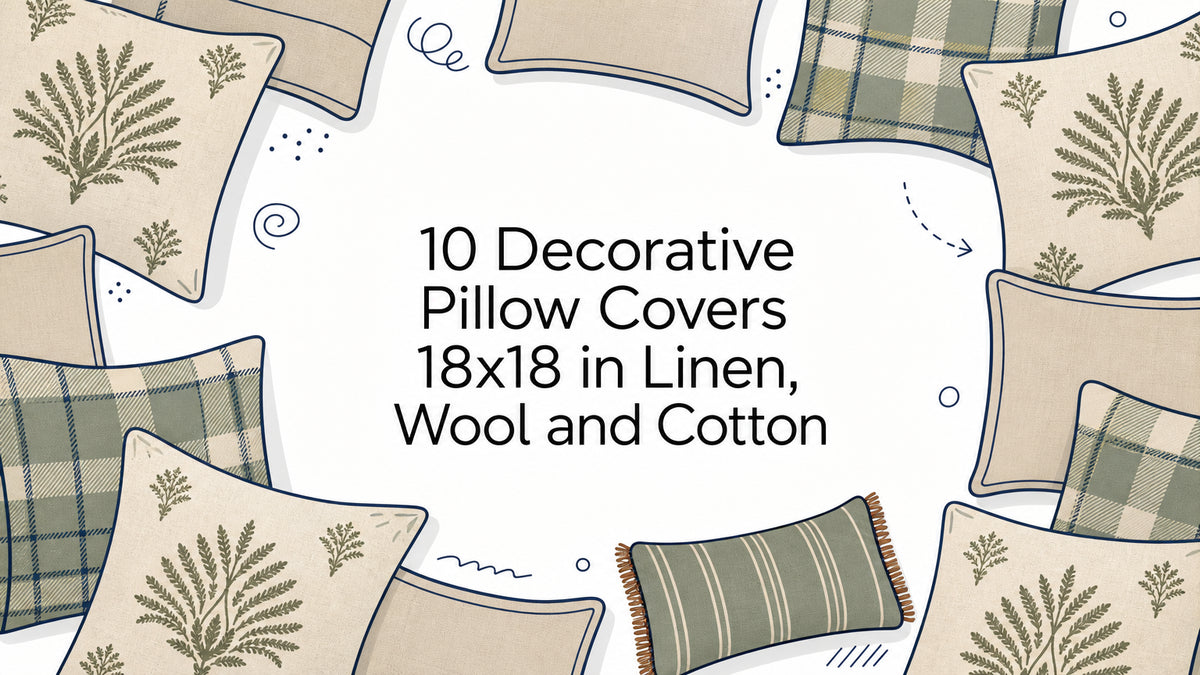
10 Decorative Pillow Covers 18x18 in Linen, Wool and Cotton
Shopping for decorative pillow covers 18 x 18 sounds simple until you start scrolling. Thousands of near-identical polyester squares, vague fabric claims, and no clear answer on whether the cover will fit your insert. You want something that looks good on your sofa and still looks good after a year of use.
Here is the short answer. Buy an 18x18 cover with a 20x20 insert if you like a full, plump look, or match the insert to the cover size for a cleaner, tailored shape. Then choose the fabric first, because it drives how the pillow looks, feels, and wears. Linen, wool, and cotton hold up best and age well.
Below you will find 10 picks across those three fabrics, with notes on color, pattern, finish, and price. At KOREDECOR, our artisans in India hand block print linen covers and weave wool covers with Kala cotton backs and invisible zippers, so we point out what to check on any cover, ours or not. Each pick includes fit and insert advice so you can buy once and get it right.
1. KOREDECOR hand block printed linen pillow covers
Fabric and construction
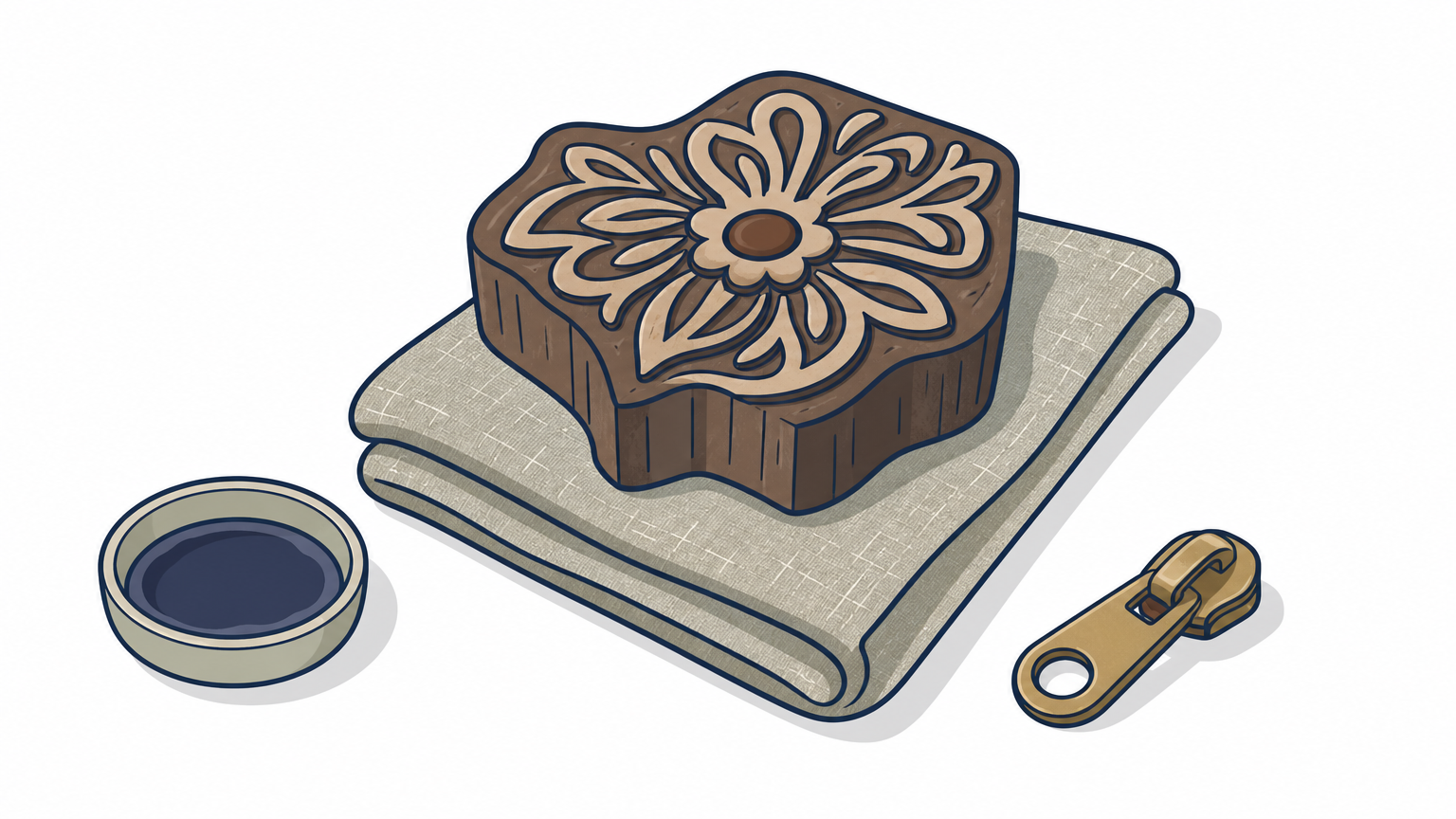
Our hand block printed linen pillow covers start with artisans in India who stamp each design by hand with carved wooden blocks. The front is 100% pure linen, and the back is original Kala cotton, a sturdy, dry-textured cotton that grips an insert well. Dyes are eco-friendly, and the print appears on both sides.
- Front: 100% pure linen
- Back: original Kala cotton
- Closure: invisible YKK zipper
- Dyes: eco-friendly
Best styles and colors
Floral and geometric designs lead the range, in teal, rosedust, forest green, slate, and quieter neutral tones. One printed cover on a solid sofa is often enough. Two in the same color family look deliberate without feeling matched.
Because each block is pressed by hand, tiny shifts in alignment are normal. Treat them as proof of handwork, the detail that machine-printed covers never have.
Insert size and fit
Many of our designs come in lumbar shapes, so confirm the 18x18 option on the product page before you order. For an 18x18 cover, choose a 20x20 insert if you want a full, crisp pillow. The linen has little stretch, so a smaller insert leaves the corners limp.
An 18x18 cover with a 20x20 insert gives the fullest look, and linen needs that extra two inches to hold its shape.
The invisible zipper sits flush at the seam, so you can swap inserts without a visible closure line.
Price and care
Covers run about $50 to $75 each, and shipping is free in the USA. If the color is not right in your room, the 7-day return policy covers you. Reviewers on our 4.94-star average mention the packaging and the fabric quality most often.
For care, spot clean first. If you must wash, use cold water on a gentle cycle, wash the cover alone the first time, and air dry. Linen softens with every wash, so a little wrinkling is part of its charm. See the full range at KOREDECOR.
2. KOREDECOR Indian wool pillow covers
Fabric and construction
Our wool covers pair a pure Indian wool front with an original Kala cotton back. The wool gives you visible texture and warmth. The cotton back keeps the cover steady on the insert, so it does not twist or sag.
- Front: pure Indian wool
- Back: Kala cotton
- Shapes: square and lumbar
Best styles and colors
Designs include motifs, checks, and stripes, and some pieces add tassels or fringe. The Bhujodi wool pieces come from a weaving tradition in Kutch, Gujarat, and they carry a true handwoven look.
Use one wool cover to add texture to a smooth sofa. Layer it with a block printed linen cover and you get contrast in both pattern and fabric.
Insert size and fit
Square and lumbar options both exist, so check the size on each listing before you buy 18x18 decorative pillow covers from us. Wool gives a little more than linen. A matching 18x18 insert looks tailored, and a 20x20 insert looks fuller.
Pick a 20x20 insert for plush, or match the cover size for crisp, clean lines.
If a cover has fringe or tassels, a slightly smaller insert keeps the trim from bunching at the corners.
Price and care
Wool covers run about $50 to $95, with free shipping in the USA. The 7-day return policy lets you test the color against your own sofa or bed.
For care, spot clean first and skip hot water. If the cover needs more, hand wash in cold water or dry clean, then dry it flat. Never wring or tumble wool, since heat and friction cause shrinking.
3. Solid belgian-style linen pillow covers
Fabric and construction
Belgian-style covers use a medium-weight, stonewashed linen with a slubby, relaxed weave. Read the label closely, because "linen-look" often means polyester. A true linen or linen-cotton blend will say so.
- Closure: hidden zipper or envelope back
- Finish: pre-washed, so shrinkage is minimal
- Seams: double-stitched corners last longest
Best styles and colors
Oatmeal, flax, ivory, charcoal, and sage do the most work. They calm a busy room and let a patterned piece stand out.
Buy 18x18 decorative pillow covers in solid linen as your quiet base layer, then add one printed cover on top. Mixing two or three neutral shades looks richer than one flat color.
Insert size and fit
Linen does not stretch, so size up to a 20x20 insert for full corners. A same-size insert leaves the cover looking flat and slightly wrinkled.
Solid linen shows every flaw in the fill, so a full 20x20 insert matters more here than on a busy pattern.
Choose a zipper over an envelope back if you swap inserts often, since envelope openings can gape on a tightly stuffed pillow.
Price and care
Expect roughly $15 to $40 per cover, which makes this the budget pick on the list. Handmade covers cost more, but a good solid linen cover still wears well for years.
Wash cold on a gentle cycle, tumble dry low, and pull the cover out while slightly damp. Iron on medium heat if you want a crisp look, or leave the wrinkles for a relaxed one.
4. Velvet pillow covers for a plush look
Fabric and construction
Velvet is a pile fabric, and the fiber decides how it behaves. Cotton velvet has a matte, deep finish and breathes well. Polyester velvet costs less and resists crushing better, which suits a busy family sofa.
- Fiber: cotton, polyester, or a blend
- Back: matching velvet or plain cotton
- Closure: invisible zipper looks cleanest
Best styles and colors
Jewel tones show off velvet best. Emerald, rust, navy, and mustard look richer because the pile catches and bends light. Blush and taupe give you the same softness in a quieter way.
Pair one velvet cover with a matte linen or wool cover. The contrast in texture keeps a neutral sofa from feeling flat, and it works well in fall and winter.
Insert size and fit
Velvet drapes and gives slightly, but the pile shows every dent. For 18x18 decorative pillow covers in velvet, choose a 20x20 insert so the corners stay firm.
A full 20x20 insert keeps velvet looking plush instead of rumpled.
Check the zipper too. A cheap, exposed zipper snags the pile, so look for one tucked into the seam.
Price and care
Expect about $12 to $35 per cover, depending on fiber and finish. Cotton velvet sits at the higher end.
For care, read the label first, since many velvets say dry clean only. Otherwise spot clean gently and steam out creases from the back. Never iron directly on the pile, because heat flattens it for good.
5. Woven cotton jacquard pillow covers
Fabric and construction
Jacquard is a weave, not a print. The loom raises and lowers threads to build the design into the cloth, so the pattern is woven in, not printed on. That means it will not crack or fade with washing, and you can feel a slightly raised texture under your hand.
- Fiber: cotton or cotton blend
- Weave: tight, medium to heavy weight
- Closure: zipper or envelope back
Best styles and colors
Damask, diamonds, trellis, and small florals are the common patterns. Tone-on-tone designs work hardest, such as cream on cream or sage on sage, because they add texture without clashing. Choose a two-color jacquard when you want the pattern to read from across the room.
Insert size and fit
Dense weaves have almost no give. When you shop for 18x18 decorative pillow covers in jacquard, go up to a 20x20 insert so the corners fill out instead of sagging.
A tightly woven cover needs a fuller insert, because the fabric will not stretch to hide a flat one.
Prefer a zipper here. Forcing a firm insert through an envelope opening is awkward, and the opening can gape once the pillow is stuffed.
Price and care
Expect about $15 to $45 per cover, with heavier weaves at the top of that range. Cotton jacquard is a sensible pick when you want pattern without paying handmade prices.
Turn the cover inside out and wash it cold on a gentle cycle to protect the raised threads. Tumble dry low, or air dry to limit shrinking, since cotton can tighten a little on the first wash.
6. Ruffle and gingham cotton pillow covers
Fabric and construction
These covers use lightweight cotton, usually poplin, percale, or a cotton-linen blend. Gingham is a yarn-dyed check, so the pattern is woven from dyed threads and shows on both sides. Ruffles are cut separately and gathered into the seam, so look for double-row stitching.
- Fiber: cotton poplin or cotton-linen blend
- Trim: gathered ruffle, flat flange, or piping
- Closure: zipper or envelope back
Best styles and colors
Classic gingham in black and white, sage, butter yellow, or dusty blue suits farmhouse and cottage rooms. Small checks read as a neutral, while large checks read as a statement. Ruffles also soften a leather or structured sofa.
Mix one gingham cover with a solid linen cover. Keep ruffled pieces to one per seat so the look stays sweet, not fussy.
Insert size and fit
Cotton poplin has a little give, but a ruffle adds bulk at the edges. For 18x18 decorative pillow covers with ruffles, use a 20x20 insert so the center fills out and the trim stands up instead of drooping.
Ruffles need a full insert, or the middle sags and the trim collapses.
Flat flange styles are the exception. Those can take a matching 18x18 insert because the border sits outside the stuffed area.
Price and care
Expect about $12 to $35 per cover. Ruffled and piped styles cost more than plain gingham.
Wash cold on a gentle cycle, and wash dark checks alone the first time since dye can bleed. Tumble dry low and pull the cover out while slightly damp. Press the ruffle from the back so the gathers keep their shape.
7. Embroidered and beaded pillow covers
Fabric and construction
Embroidery is thread stitched through a base cloth, usually cotton, linen, or velvet. Beading adds sewn-on beads, sequins, or mirror discs. Flip the cover over before you buy. Neat, trimmed stitching and a plain cotton back tell you the work will last.
- Base: cotton, linen, or velvet
- Decoration: thread, beads, sequins, or mirror work
- Closure: zipper, which handles the extra weight better
Best styles and colors
Ivory thread on natural linen, suzani-style florals, and mirror work suit boho and global rooms. Jewel tones with gold thread feel formal. Let one embellished cover be the focal point, and surround it with solid pieces so it does not compete.
Insert size and fit
Beads weigh down the front, so a limp insert makes the pillow slump. For 18x18 decorative pillow covers with heavy decoration, use a firm 20x20 insert and fluff it often.
Embellishment adds weight, so a full, firm insert keeps the design facing forward.
Choose a soft feather or down-alternative fill, not a stiff foam block, so beads do not press hard against the seams.
Price and care
Expect about $20 to $80 per cover. Hand-beaded and mirror-work pieces cost the most, and machine embroidery on cotton costs the least.
Skip the washing machine. Spot clean or dry clean beaded covers, and hand wash simple embroidery inside out in cold water. Press from the back over a towel so the stitches and beads never touch the iron.
8. Striped and plaid wool-blend pillow covers
Fabric and construction
These covers mix wool with acrylic, polyester, or cotton. The blend lowers the price and cuts the itch while keeping some of wool's warmth. Check the label for wool content. Around 30 to 50 percent feels like real wool, and less is mostly synthetic. Stripes and plaids are yarn-dyed, so the pattern is woven into the cloth.
- Fiber: wool with acrylic, polyester, or cotton
- Weave: twill or flannel-style, medium weight
- Back: cotton or matching blend with a zipper
Best styles and colors
Buffalo check in red or forest green, tartan, and ticking stripes in cream and charcoal are the staples. They suit cabins, farmhouse rooms, and any sofa that needs fall warmth. Keep to one plaid and one stripe per seat, and make sure they share one color so they read as a pair.
Insert size and fit
Blends have a little give, so 18x18 decorative pillow covers in this fabric work with either size. A 20x20 insert looks plush, and a matching 18x18 looks tailored. Stripes and plaids punish a slack fill, because the lines bow instead of running straight.
A striped or plaid cover needs a full insert, or the pattern bends and gives away the flat fill.
Hold the cover up before you buy and look at the zipper seam. The pattern should line up across it.
Price and care
Expect about $15 to $45 per cover. Higher wool content costs more. Spot clean first, then hand wash cold or dry clean, and dry flat to avoid shrinking. Blends can pill with use, so a fabric shaver keeps the surface smooth.
9. Sets of 2 or 4 mixed-pattern pillow covers
Fabric and construction
Sets bundle two or four covers that share a color story but vary in pattern. Quality swings widely, so confirm every cover uses the same fabric and weight. Cotton, polyester, and faux linen mixed in one set look uneven on the sofa.
- Fabric: cotton, linen blend, or velvet
- Closure: zipper over envelope back
- Check: stitching on every cover, not just the hero photo
Best styles and colors
Look for sets built on one shared color with a mix of stripe, floral, and solid. A four-pack suits a sectional or bed, and a pair suits a loveseat or accent chair. Skip sets where every print has the same scale, because varied pattern scale is what makes the mix look styled.
Insert size and fit
Buyers often reuse old inserts with sets, and that is where the look falls apart. For decorative pillow covers 18x18 in a set, buy 20x20 inserts for every cover so each pillow looks equally full. Inserts also come in packs of two or four, so match the count.
In a set, matching insert fullness matters more than matching patterns.
Price and care
Four-packs cost less per cover, but the fabric is usually thinner. Compare the per-cover price before you decide.
| Set size | Typical price | Per cover |
|---|---|---|
| 2-pack | $18 to $40 | $9 to $20 |
| 4-pack | $25 to $60 | $6 to $15 |
Wash cold on a gentle cycle and wash the set together the first time, so any dye bleed affects all covers evenly. Tumble dry low and press while slightly damp.
10. Waterproof outdoor pillow covers
Fabric and construction
Outdoor covers use solution-dyed acrylic or coated polyester, often 600D canvas. Many listings say "waterproof" when they mean water-resistant, so read the fine print. Stitched seams can still leak in a downpour.
- Fiber: solution-dyed acrylic or coated polyester
- Finish: UV-resistant and mildew-resistant
- Closure: zipper with a covered pull
Best styles and colors
Navy, sage, terracotta, and cream hold up on patios. Bold stripes and simple geometrics also work well. Solution-dyed fabric resists sun fading far better than printed polyester.
Use these covers outside only. They feel slick next to linen and wool, so they do not belong on your living room sofa.
Insert size and fit
Pair 18x18 decorative pillow covers for outdoors with a polyester fiber or quick-dry foam insert in 20x20. Coated fabric does not stretch, so a full insert keeps the corners from sagging.
A waterproof cover cannot protect a feather insert, so match it with an outdoor-rated fill.
Covers with small mesh vents or grommets let trapped moisture escape instead of mildewing inside the pillow.
Price and care
Expect about $15 to $45 per cover. Acrylic costs the most and lasts the longest in direct sun.
Wipe or hose off dirt, then use mild soap and air dry completely before storing. In rainy seasons, bring pillows indoors.
What size insert fits an 18x18 pillow cover
The insert matters as much as the cover. For decorative pillow covers 18 x 18, a 20x20 insert gives the fullest look, and a matching 18x18 insert gives a neater, more tailored one.
Buy the insert two inches larger than the cover, and the pillow looks full instead of flat.
Insert size and the look it gives
Each size changes the shape in a predictable way, so choose by the effect you want.
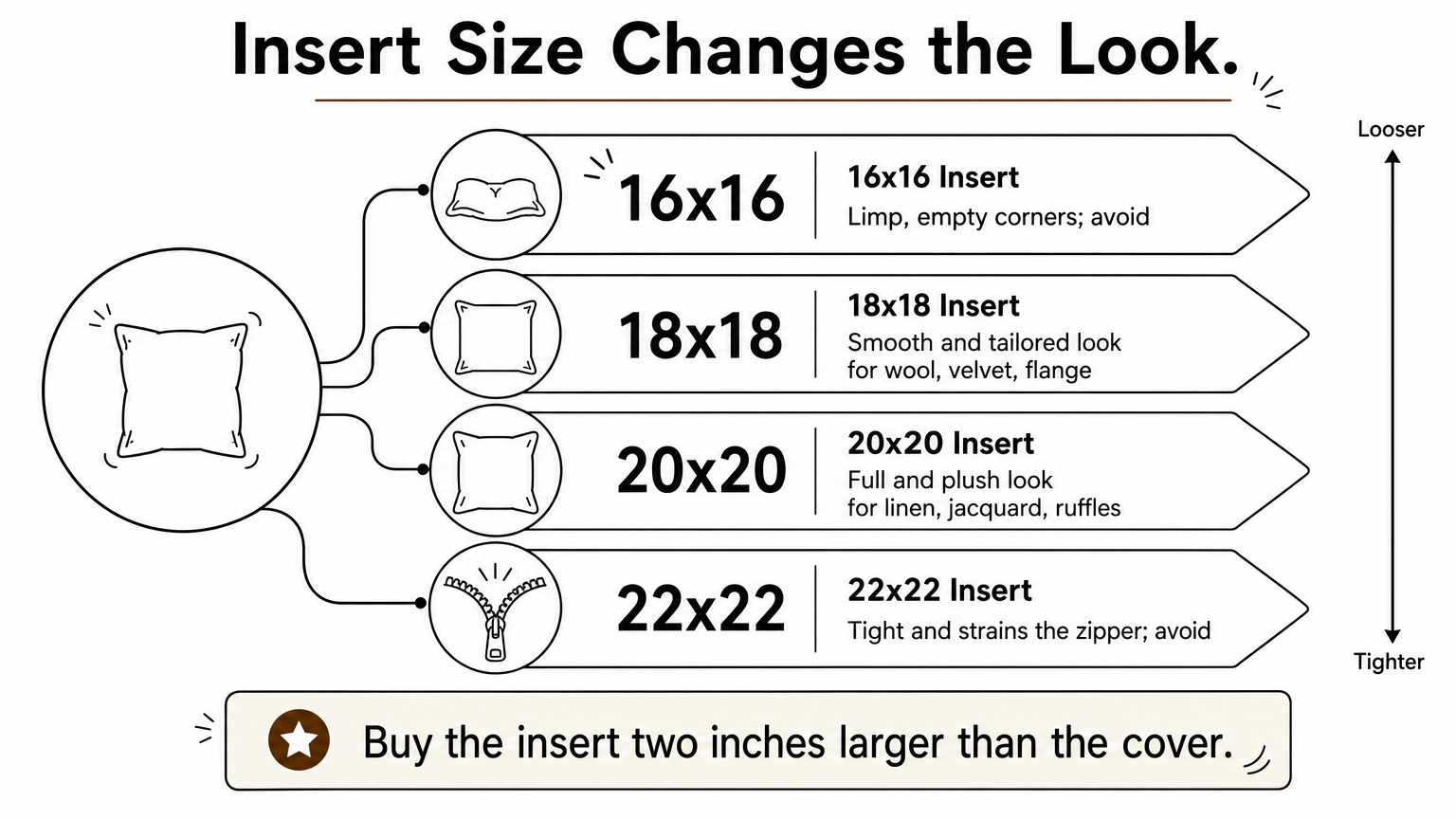
| Insert size | Look | Best for |
|---|---|---|
| 16x16 | Limp, empty corners | Avoid |
| 18x18 | Smooth and tailored | Wool, velvet, flange styles |
| 20x20 | Full and plush | Linen, jacquard, ruffles |
| 22x22 | Tight, strains the zipper | Avoid |
Measure before you trust a label. Lay the zipped cover flat and measure seam to seam, since some listings round up. A half inch of difference is normal on handmade pieces.
Fill type
Fill changes how the pillow holds its shape. Feather-down blends keep their loft and suit linen and wool, though they need a quick fluff. Down-alternative is softer, washable, and a good choice if you have allergies.
Plain polyester fiberfill costs the least but flattens within a year. Foam is firm and works best outdoors. When in doubt, buy a down-alternative insert in 20x20 and your 18x18 decorative pillow covers will keep their shape.
How to choose and style 18x18 pillow covers
Choosing a cover comes down to three questions: how hard the pillow will work, how many you need, and how you want to mix them. Answer those and the fabric, the count, and the pattern all fall into place.
Match fabric to the room
Start with daily use. A family sofa needs wool or polyester velvet that resists wear, while a bedroom suits linen or cotton that softens over time. Then pull one color from your rug or artwork so the pillows look chosen, not collected.
| Room | Best fabric | Why |
|---|---|---|
| Family sofa | Wool, polyester velvet | Resists wear and crushing |
| Bedroom | Linen, cotton | Breathes and softens |
| Formal living room | Embroidered, velvet | Adds polish |
| Patio | Solution-dyed acrylic | Resists sun and mildew |
Layer and mix with intent
Then build in layers. Put three pillows at each end of a sofa, or two on an accent chair, because odd groupings look relaxed. Give each group one solid, one pattern, and one texture such as wool or velvet.
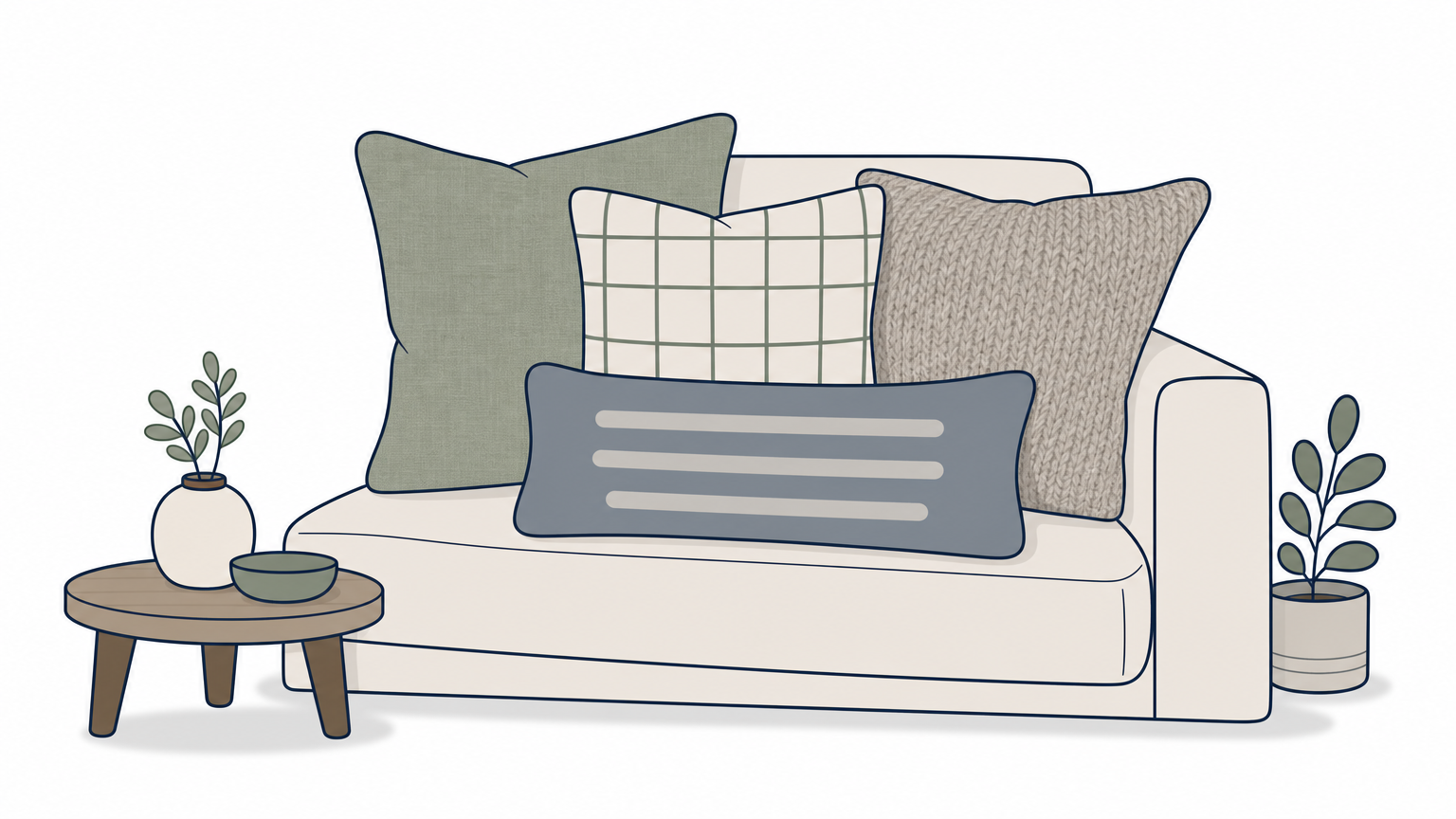
Pick one fabric to lead, one pattern to speak, and one solid to rest the eye.
Finally, vary the shape. Two 18 x 18 decorative pillow covers at the back with a lumbar in front adds depth without clutter. Keep pattern scale varied, a large print beside a small check, and repeat one color across all three so the group reads as a set.
Picking the right covers for your space
Good decorative pillow covers 18 x 18 come down to two decisions. Pick the fabric that suits how the room is used, then pair it with a 20x20 insert so the corners fill out. Linen, wool, and cotton age well, and a cover with a real zipper and tidy stitching will outlast most bargain polyester squares.
Start small if you are unsure. Choose one solid base cover, one pattern, and one textured piece, and run a shared color through all three. That mix looks styled, not matched, and it works on a sofa, a bed, or an accent chair.
Ready to see handwork up close? Browse our linen block print pillow covers, with pure linen fronts and Kala cotton backs. You get free USA shipping and a 7-day return policy, so you can test the color at home.


