
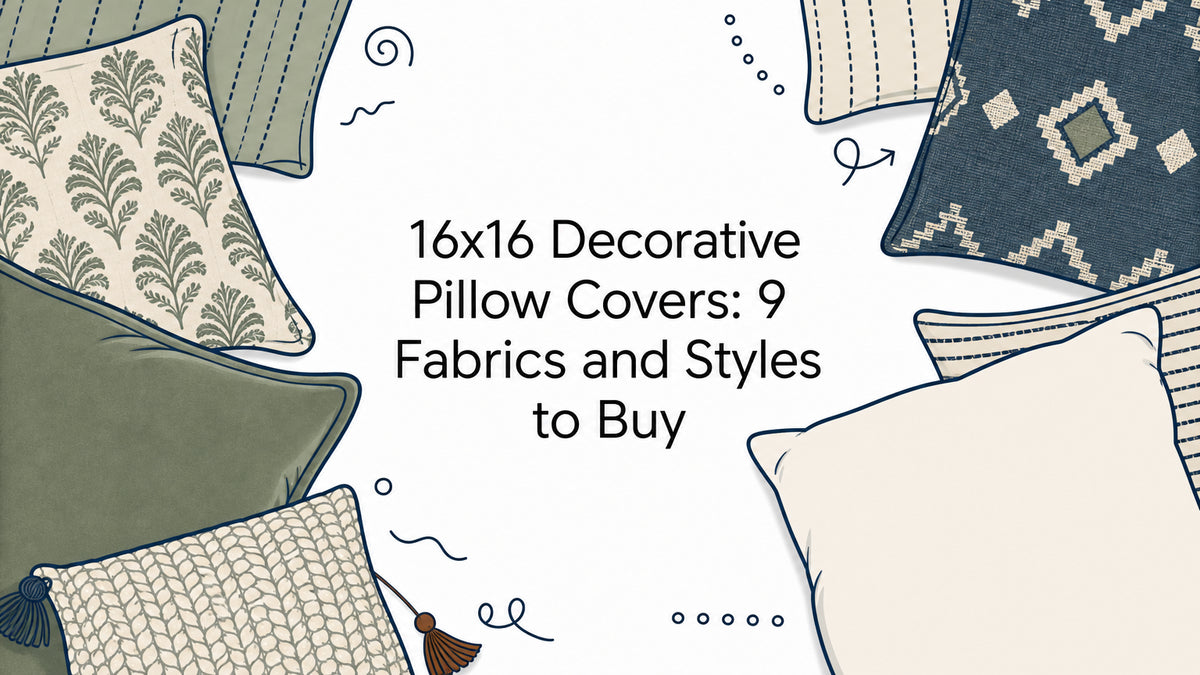
16x16 Decorative Pillow Covers: 9 Fabrics and Styles to Buy
Shopping for decorative pillow covers 16 x 16 sounds simple until you open ten tabs. Prices run from $8 to $90, fabrics range from scratchy polyester to real linen, and every photo looks good under studio light. What you need is a way to tell which covers will still look right after a year on your sofa.
Here is the short answer. Natural fabrics beat synthetics for 16x16 covers, and the details matter more than the pattern. Look for linen, cotton or wool, a hidden zipper, and prints that are on both sides. Expect to pay $50 to $95 per cover for handmade quality. Cheaper covers often fade, pill or wrinkle badly.
Below you'll find nine fabrics and styles worth buying, from block printed linen to textured Indian wool with fringe. At Koredecor, we work with artisans in India who hand block print and hand loom our covers, so we know what separates good from forgettable. For each option, you'll see how it looks, how it wears and which rooms it suits best.
1. Hand block printed linen pillow covers
What it looks and feels like
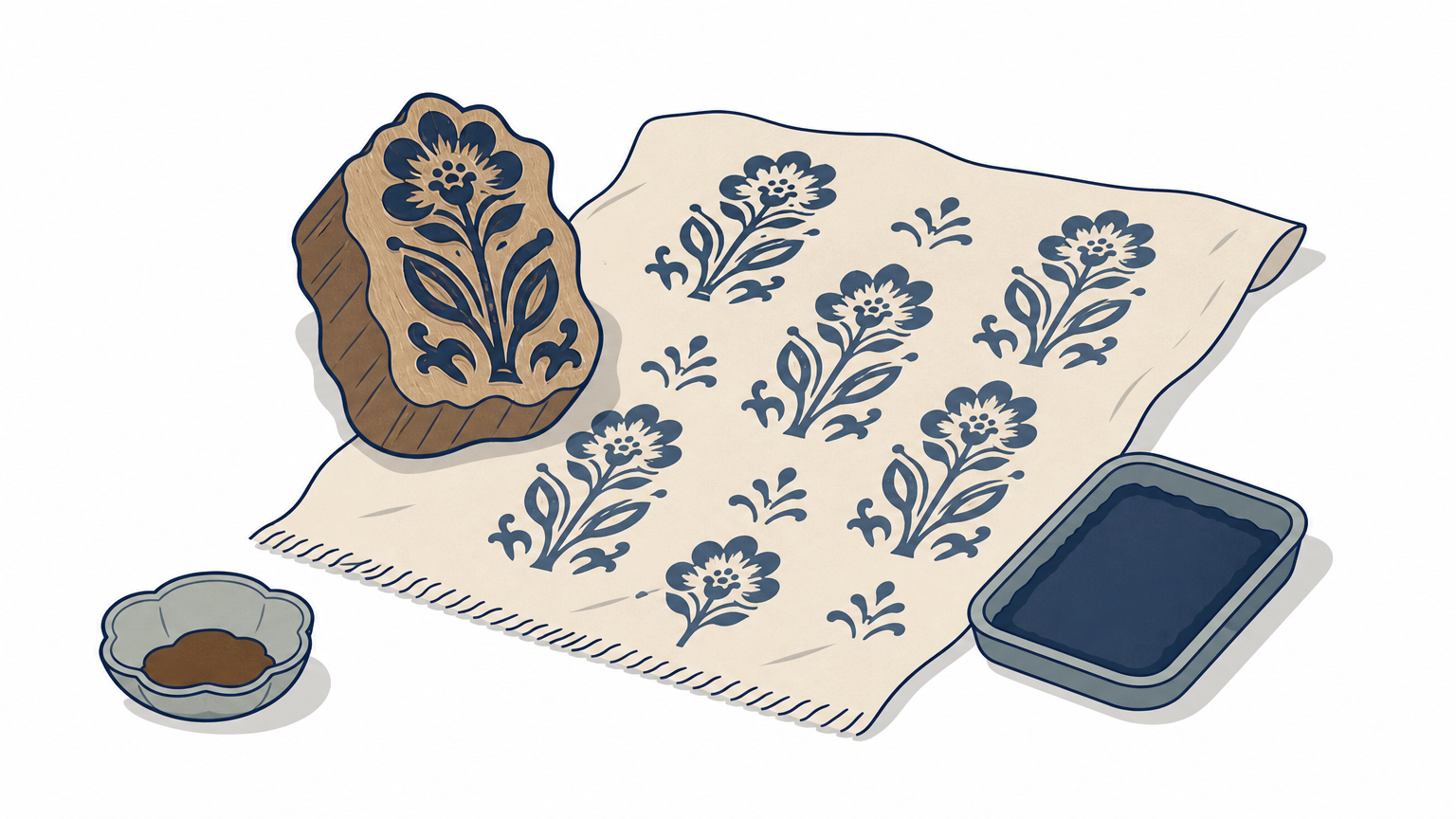
Linen has a dry, cool hand and a visible slub in the weave. For block printing, an artisan carves a pattern into a wooden block, dips it in dye and stamps it onto the cloth one repeat at a time. That means no two covers match exactly, and the small shifts in ink density are the point. A digitally printed polyester cover can't fake that.
Our hand block printed pillow covers use pure linen on the front and original Kala cotton on the back, with eco-friendly dyes and an invisible YKK zipper. Both sides carry a print, so the cover looks finished even when a cushion gets flipped over. Linen wrinkles a little and softens with every wash, which suits a lived-in sofa better than a stiff, shiny fabric.
Block printing is the one technique where small imperfections are the proof that a cover was made by hand.
Best styles and colors
Florals and geometrics lead the category, and both work well on 16x16 decorative pillow covers because a square gives each repeat room to breathe. These are the colors that pair most easily with existing decor:
- Teal: a strong accent against cream, tan or gray sofas.
- Rosedust: a muted pink that warms up neutral rooms without looking sweet.
- Forest green: pairs well with leather, walnut and rust-colored throws.
- Slate: a calm, cool option for modern or coastal spaces.
- Neutrals: ivory and sand prints that add pattern without adding color.
Mix one geometric with one floral in the same color family. Keep the third pillow solid.
Who it suits and typical price
These covers suit you if you want pattern that feels collected, not matched from a catalog set. They also work for gift buyers, since a printed linen cover looks special without needing a card to explain it. Designers like them for staging because the prints photograph well.
Expect to pay about $50 to $75 per cover for handmade linen. That is several times the cost of a $12 printed cover, but you are paying for real linen, a lined cotton back and a zipper that won't snag. One caution: many of our block printed designs come in lumbar shapes, so confirm the size is 16x16 before you add to cart.
2. Indian wool pillow covers
What it looks and feels like
Wool brings a warmth that linen can't. Our Indian wool pillow covers use a pure Indian wool front with a Kala cotton back, so the face feels cozy while the back stays smooth against your sofa. The weave is dense and slightly nubby, and it looks rich even in a plain color.
Texture does the decorating here. Bhujodi wool pieces, named for a weaving village in Gujarat, show off the handwoven character of the loom. Wool also springs back after a squish, so a 16x16 cover stays plump.
Wool covers earn their place through texture first and color second.
Best styles and colors
Pick the pattern first, then match the color to your sofa. Tassels and fringe suit boho rooms, while checks and stripes feel more farmhouse.
- Oatmeal and cream: quiet texture for modern neutral rooms.
- Rust and ochre: pairs well with leather and walnut.
- Olive and moss: a natural match for linen and wood.
- Charcoal stripes: a sharp contrast on light sofas.
Who it suits and typical price
Choose wool if you want a cover that adds weight and warmth to a living room, a reading corner or a bed in cooler months. It also works for rustic and heritage styling, where a shiny fabric would look out of place. Skip it for hot, humid rooms.
Expect to pay about $50 to $95 for handmade wool. We make both square and lumbar shapes, so check the listing before buying decorative pillow covers 16x16. Spot clean wool or dry clean it, and avoid hot machine washes.
3. Velvet pillow covers
What it looks and feels like
Velvet has a short, dense pile that shifts shade with the light, so one cover looks deep in a corner and brighter by a window. Most 16x16 decorative pillow covers in velvet use polyester, which is soft and cheap. Cotton velvet costs more and has a matte, slightly dusty finish that feels less slippery.
Pile also shows every mark. Press a hand into the cover and you leave a print, and crushed patches appear where people lean. A soft garment brush or a pass with a steamer held a few inches away brings the nap back.
Velvet is the dressy pillow: it looks rich right away, but it shows wear faster than linen or wool.
Best styles and colors
Solid jewel tones work best, because the sheen is the decoration. Skip busy prints on velvet, since they fight the fabric's shine. These colors earn their keep:
- Emerald and deep green: striking against tan, gray or white sofas.
- Navy: a calm anchor for blue and neutral rooms.
- Blush and dusty rose: softens a dark leather sofa.
- Mustard and rust: adds warmth to modern spaces.
Pair velvet with a textured cover, such as linen or wool, so the mix feels layered.
Who it suits and typical price
Pick velvet for a formal living room, a bedroom or a seasonal refresh in fall and winter. It is a poor match for homes with pets that scratch or kids with sticky hands, because pile snags and marks easily. We don't make velvet ourselves, since our focus is handmade linen and wool. For this fabric, look for a hidden zipper and a cotton or polyester lining.
Expect to pay about $15 to $40 for most velvet covers, and more for cotton velvet or designer finishes.
4. Cotton pillow covers
What it looks and feels like
Cotton is the everyday workhorse. It feels soft, breathable and matte, and it takes dye well, so prints come out crisp at a fair price. Canvas and duck weights are thick and sturdy. Percale and voile weights are lighter and drape more.
Washing is where cotton wins. Most covers go in the machine on a gentle cycle, though you should wash cold to limit shrinkage. That is why we use original Kala cotton on the back of our linen and wool covers. It is durable, and it feels good against a sofa.
Cotton is the easiest fabric to live with, because it washes, wears and fades gracefully.
Best styles and colors
Stripes, ticking and woven patterns look best on cotton because the weave is even. These work well as 16x16 decorative pillow covers:
- Stripes and ticking: classic farmhouse and coastal.
- Woven ikat and dhurrie designs: pattern with a handmade feel.
- Solid canvas in white, sage or terracotta: a clean base for busier pillows.
- Small florals: a soft match for plain bedding.
Who it suits and typical price
Choose cotton if you have kids, pets or a busy household. It tolerates frequent washing, and a faded cover still looks good. It also suits warm rooms and porches under cover, since it breathes better than velvet or wool.
Expect to pay about $10 to $35 for most cotton covers, and more for handwoven or block printed pieces. Check that the zipper is hidden and the seams are finished. Thin, loosely woven cotton can show the insert's outline through the fabric.
5. Faux suede pillow covers
What it looks and feels like
Faux suede is polyester microfiber brushed to mimic the nap of real suede. It feels smooth, slightly peachy and warm to the touch, and the brushed surface shows light and dark patches that give a solid color some depth.
The fabric is tougher than it looks. It resists spills better than velvet and wipes clean with a damp cloth. The tradeoff is that it doesn't breathe, so it can feel warm and clingy in summer.
Faux suede gives you the suede look without the price or the upkeep.
Best styles and colors
Solids dominate, because the nap is the decoration. Piped edges and light embossing add detail, but skip busy prints and let the texture work. These colors do best on 16x16 decorative pillow covers:
- Camel and tan: a natural match for cream sofas and leather.
- Chocolate brown: grounds a light, airy room.
- Sage and olive: a soft, earthy contrast.
- Charcoal: a clean, modern look for gray sofas.
Who it suits and typical price
Choose faux suede if you want a low-maintenance cover for a family room, den or home office. It suits modern and mid-century styling, where a handmade print might feel too busy. Skip it for hot rooms and for pets that scratch, since claws leave visible pulls.
Expect to pay about $12 to $35 for most covers. We don't make faux suede, since our focus is natural fibers. When you shop, look for a hidden zipper and check that the nap runs in the same direction on both sides of the seam.
6. Silk and art silk pillow covers
What it looks and feels like
Silk has a liquid drape and a soft glow that shifts with the light. Dupioni silk shows crisp slubs and a faint rustle, while charmeuse is smooth and shiny. Pure silk feels cool and fine to the touch.
Art silk is the budget route. It is usually viscose or a polyester blend made to copy the sheen. In photos it looks close, but it feels heavier and less breathable. Both fabrics are delicate, because sun fades them and a single water drop can leave a spot.
Silk is a showpiece fabric: beautiful in the right room, unforgiving in a busy one.
Best styles and colors
Sheen carries the look, so keep the design simple. Dupioni solids and subtle jacquard weaves work best on 16x16 decorative pillow covers, and saturated shades show off the luster:
- Champagne and gold: a warm glow on cream or tan sofas.
- Peacock teal: a bold jewel tone for dark or neutral rooms.
- Burgundy: rich against gray and charcoal.
- Ivory: a quiet, formal option for bedding.
Match one silk cover with matte linen or wool so the shine reads as an accent.
Who it suits and typical price
Choose silk for a formal living room, a guest bed or any low-traffic spot where the cover won't get leaned on daily. Skip it if you have kids, pets or a sofa in direct sun. Most silk covers are dry clean only.
Expect to pay about $15 to $40 for art silk and $40 to $120 for pure silk. We don't make silk, since our focus is linen and wool. When you shop for decorative pillow covers 16 x 16 in this fabric, choose a lined cover with a hidden zipper, because thin silk shows the insert's outline.
7. Embroidered and embellished pillow covers
What it looks and feels like
Embroidery gives a cover a raised, tactile surface. Thread is stitched through the fabric in chain stitch, satin stitch or crewel work, and beads, sequins or tiny mirrors sit on top. Hand embroidery shows small shifts in stitch length, while machine work looks flat and uniform.
Check the back of the panel before you buy. Dense stitching can feel scratchy, so a cotton lining or backing matters. Beads and sequins also snag, which means these covers need gentler handling than a plain weave.
Embroidery decorates the cover for you, but it asks for more care than any plain fabric.
Best styles and colors
Pattern comes from the stitching, so let the thread do the work. Tone-on-tone embroidery on linen or cotton looks quiet, while contrast thread stands out. These options work well as 16x16 decorative pillow covers:
- Ivory on natural linen: subtle texture for neutral rooms.
- Crewel florals on cream: a classic cottage look.
- Mirror work in jewel tones: suits boho and eclectic spaces.
- Pom-pom or tassel trim: playful, good for beds and kids' rooms.
Keep it to one embellished cover per grouping, and let plain linen or wool balance it.
Who it suits and typical price
Choose embroidered covers for a bedroom, guest room or reading chair where they won't get crushed daily. Skip beaded styles if you have toddlers or pets, because beads pull loose. Most covers should be spot cleaned or dry cleaned.
Expect to pay about $20 to $45 for machine embroidery and $50 to $100 for true hand work. We don't sell embroidered covers, but our Indian wool pillow covers with tassels and fringe give you a similar handmade detail with less fragility.
8. Outdoor and waterproof pillow covers
What it looks and feels like
Outdoor covers use solution-dyed acrylic or coated polyester, so the color runs through the fiber and resists sun fading. The hand is smoother and a little stiffer than cotton. Better acrylics are woven to look like canvas or linen, so they sit comfortably beside indoor pieces.
Water resistance varies by label. Water-repellent fabric sheds light rain, while coated waterproof fabric blocks it but traps heat. Neither saves a soaked insert, so choose a quick-dry insert and bring cushions inside before a storm.
Outdoor covers defend against sun and spills, but they still need a dry spot when the weather turns.
Best styles and colors
Stripes and solids work best, since outdoor prints are woven or printed for fade resistance. For 16x16 decorative pillow covers on a patio, stay with colors that hide dirt.
- Navy and white stripes: a classic coastal look.
- Sand and taupe: blends with wicker and teak.
- Terracotta and coral: bright against green plants.
- Charcoal: hides grime on dark furniture.
Who it suits and typical price
Choose these covers for a porch, patio, pool deck or sunroom, or for an indoor spot with heavy spill risk. They also suit homes with young kids who treat the sofa as a lunch table. They won't give you the handmade character of linen or wool, though.
Expect to pay about $10 to $30 for coated polyester and $25 to $60 for solution-dyed acrylic. We don't make outdoor covers, since our focus is natural fibers. When you shop, look for a hidden or water-resistant zipper, and let covers dry fully before storing them to prevent mildew.
9. Textured chenille and faux fur pillow covers
What it looks and feels like
Chenille is woven from fuzzy yarn, so the surface feels plush, soft and slightly ribbed. Faux fur is acrylic or polyester fiber on a knit backing, and it feels deep, fluffy and a little silky. Both add texture before any pattern does.
The tradeoffs are shedding and snagging. New faux fur sheds for the first few weeks, and chenille loops catch on rings and claws. Shake covers out before you wash them.
Chenille and faux fur are bought for touch first, and they trade easy cleaning for instant coziness.
Best styles and colors
Texture is the decoration, so keep the color quiet. Chenille comes in herringbone and woven geometric patterns, while fur comes in solid, shaggy or tipped finishes. These work well as 16x16 decorative pillow covers:
- Ivory and cream: soft texture for neutral and Scandinavian rooms.
- Oatmeal and taupe: hides dust and light pet hair.
- Sage and dusty blue: a calm color with a cozy feel.
- Charcoal: a moody contrast on light sofas.
Who it suits and typical price
Reach for these in a bedroom, reading nook or winter living room where you want instant warmth. Skip faux fur in hot rooms and in homes with heavy pet hair, because the pile traps it. Chenille handles daily use better than fur.
Expect to pay about $12 to $35 for chenille and $10 to $30 for faux fur. We don't make either, since our focus is natural fibers. Our wool covers give you similar coziness with a denser weave. When you shop for decorative pillow covers 16x16 in these fabrics, look for a hidden zipper and a care label that allows a gentle cold wash.
Choosing the right size insert for 16x16 covers
Even a great cover looks sad over the wrong insert. Measure your cover flat from seam to seam, then pick the insert before you order, because the insert decides the shape more than the fabric does.
Size up to an 18x18 insert
For 16x16 decorative pillow covers, buy an 18x18 insert. The extra two inches push into the corners and keep the edges from sagging. A 16x16 insert in a 16x16 cover looks flat, with hollow, wrinkled corners that no amount of fluffing fixes.
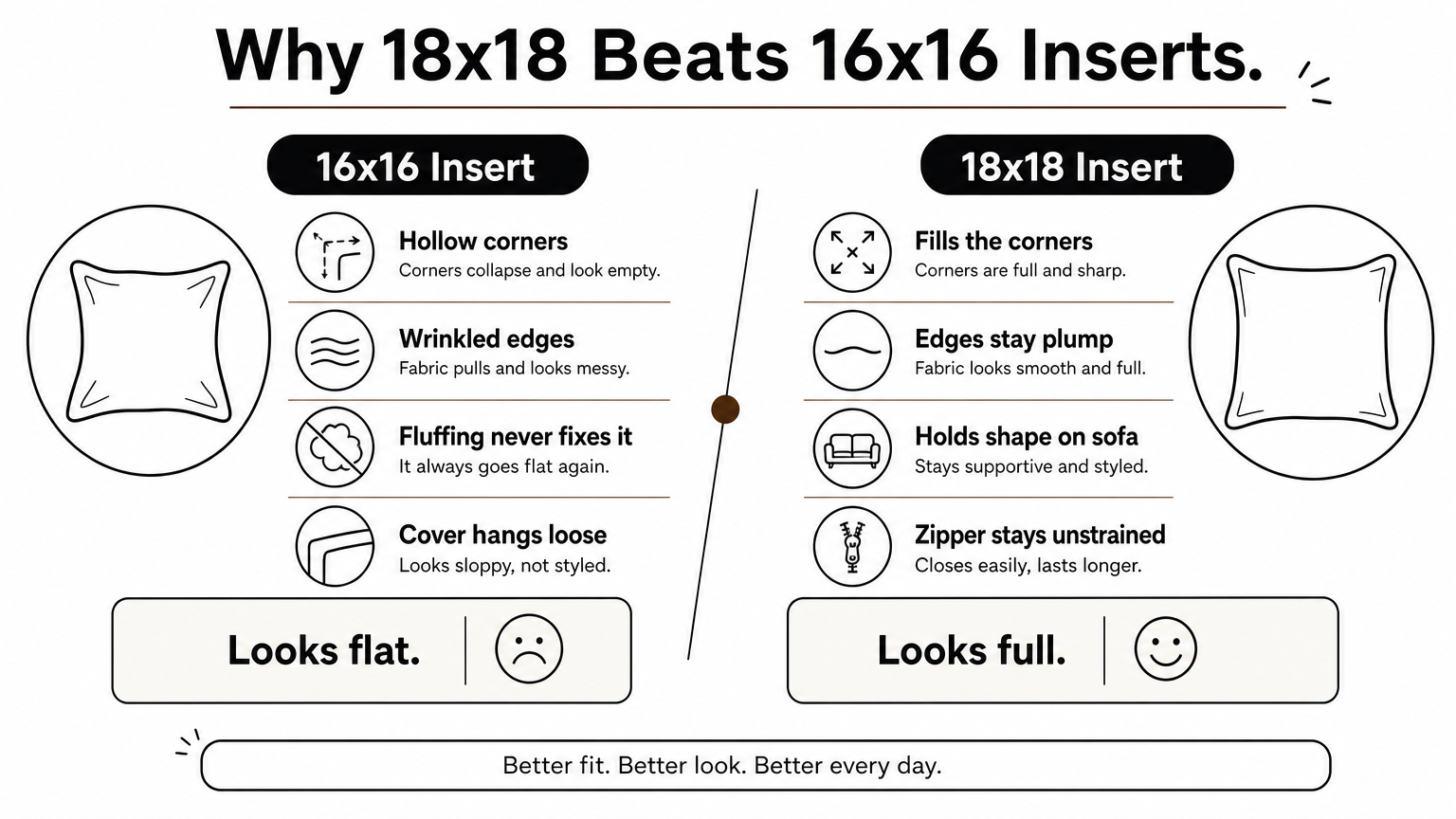
A cover should fit snugly over an insert two inches larger, never one the same size.
Don't go bigger than 18 inches, though. Handmade linen and wool have less stretch than polyester, so a 20x20 insert strains the zipper and distorts a block print. Also check the cover's true size on the listing, since hand-cut textiles can vary by half an inch.
Pick a fill that fits your use
Fill sets the feel, the price and how the pillow behaves after a month of leaning. These are the three common options:
| Fill | Feel | Care | Typical price |
|---|---|---|---|
| Feather-down blend | Soft, sinks and holds a chop shape | Spot clean or dry clean | $25 to $50 |
| Down alternative | Plush, springy, hypoallergenic | Machine washable | $10 to $20 |
| Polyester fiberfill | Light, firmer at first, flattens over time | Often washable | $6 to $12 |
For a sofa, we recommend a feather-down blend because it holds a neat shape under linen or wool. For kids' rooms, allergy-prone homes or pillows that get washed often, choose down alternative.
Buying tips: sets, zippers, care and price
Once you've chosen a fabric and an insert, a few details decide whether a cover lasts. Check them before you pay. Each takes under a minute, and together they save you from returns.
Sets versus single covers
Sets look like a deal, but a four-pack at $24 usually means thin polyester and uneven stitching. Start with one or two quality covers, then add more. Three pillows on a sofa look more collected than a matched pair.
Buy a set only for a bed or sofa ends, where you want a true matched pair. Handmade pieces also vary slightly in color from batch to batch, so order everything at once.
Zippers and construction
Zippers fail first. Choose an invisible zipper sewn into the bottom seam, so no metal teeth scratch your furniture. Then check the seams and lining against this list:
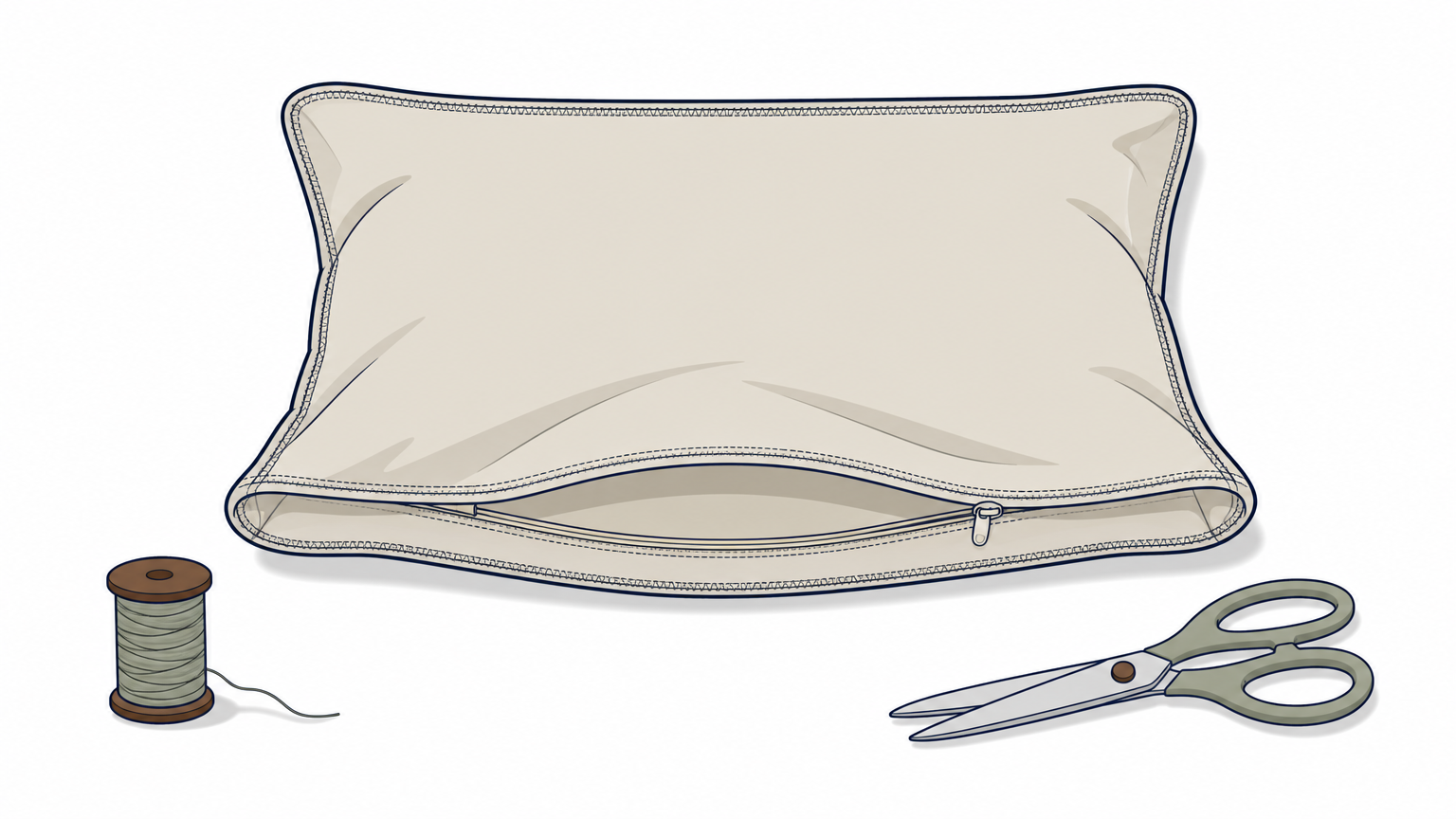
- Finished inside seams, with no loose threads
- A lining on thin silk or loosely woven cotton
- A print or weave on both sides
A hidden zipper and clean seams tell you more about quality than the price tag.
Care and price
Read the care label first. Cold wash suits linen and cotton, while wool, silk and embroidery need spot or dry cleaning. When you compare decorative pillow covers 16x16 across stores, weigh upkeep along with price. A $50 linen cover that lasts five years beats three $15 covers that fade.
| Fabric | Care | Typical price |
|---|---|---|
| Block printed linen | Cold, gentle wash | $50 to $75 |
| Indian wool | Spot clean | $50 to $95 |
| Velvet | Spot clean, steam | $15 to $40 |
| Cotton | Cold machine wash | $10 to $35 |
| Outdoor | Wipe or hose off | $10 to $60 |
Picking the right covers for your space
Start with how you live, not with the pattern. Households with kids and pets do best with cotton or outdoor fabric, while a quiet living room or bedroom can handle linen, wool or velvet without much worry. Whatever you pick, buy an 18x18 insert, check for a hidden zipper and read the care label before you pay.
Our advice is simple. For decorative pillow covers 16 x 16 that still look good in a year, choose natural fabrics and layer different textures, such as one print, one wool and one solid. If you want handmade pieces with a pure linen front, a Kala cotton back and an invisible zipper, browse our block printed linen pillow covers and pick your first pair today.


